Where?
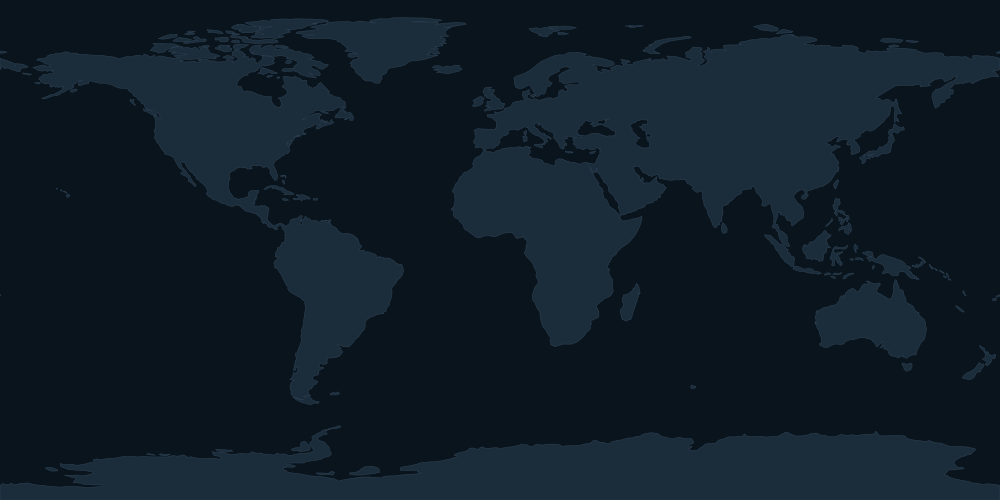
Tap the map, or search a place.
Where this comes from
How this page works
Your places and amount stay in this browser until you press Run. Then they travel inside one run request to the model lab, under a free sandbox key this page makes for you. No form, no email.
Tap a dot to add a place, tap a placed dot to name it, value it or remove it, and drag it to move it. Hold shift and drag, or press and hold on a phone, to sweep in a box of dots. With the map focused, Enter adds the center, and shift with the arrow keys sweeps a box.
The amount is split evenly across your places unless you set each one, and every figure comes back in the same dollars. Nothing is converted: the page only prints a dollar sign.
Cities, US ZIP codes and pasted coordinates are read in this browser from lists shipped with the page (Natural Earth, public domain; the US Census Bureau's ZIP areas; GeoNames, CC BY 4.0). An address is looked up only when you ask, through the Craton API, and that request shows under See the API call.
What's covered shades the map with what each model can see, counted from the data each model runs on.
What could happen?
Which earthquake
Where this comes from
About these models
Why a run takes a while
The lab runs one model at a time. A run can sit in Queued behind someone else's, and in Running for tens of seconds while the model loads its data and works through every event.
The steps above are the lab's own: this page shows Queued and Running only when the lab reports them, and the clock is simply the time since you pressed Run. Runs are content-addressed, so the same places and peril answer instantly from the store the second time.
You can leave: this page's address now carries the run, and opening it again picks the run back up.
years
Stored answer
Ceilinga year at most
A loss ceiling, not an estimate.
Run the same places and values through another model
The full numbers
See the API call
This is the exact request the page sent to the model lab, with your key held back. Any HTTP client can send it.
Some places came from the API's address search, asked first with the same key:
The run's address, which anyone with a Craton key can open:
It ran under a free sandbox key this browser is holding.
The run document the lab returned:
More: the full wizard (files, stored objects, every parameter) · the agent walk · a free API key.